
Luxury Real Estate Market Explained
Published on
April 3, 2026

Interested in growing wealth through investing in rental homes? Join the Priority Access List today.
The luxury real estate market sits at the top tier of the property world. Recent luxury real estate market news shows just how active this sector can be. In New York City, for example, Manhattan homes priced at $4 million and above generated nearly $12 billion in sales in 2025. Numbers like these highlight an important reality: luxury real estate is a global investment category influenced by wealth creation, financial markets, and shifting lifestyle preferences.
Table of Contents
- What Is the Luxury Real Estate Market?
- Key Characteristics of Luxury Properties
- Key Segments of the Luxury Real Estate Market
- Who Buys Luxury Real Estate?
- How Luxury Properties Are Valued
- Opportunities in the Luxury Real Estate Market
- Risks and Challenges in the Luxury Real Estate Market
- Luxury Real Estate as an Investment
Key Takeaways
- Luxury real estate market refers to high-end residential properties defined by prime locations, exclusivity, and premium design.
- Luxury homes attract wealthy homebuyers seeking prestige, lifestyle benefits, and long-term asset value.
- The high-end market offers strong investment potential but often involves higher costs and slower sales cycles.
Let’s break down how the luxury real estate market works and why this segment continues to attract investors, developers, and affluent buyers worldwide.
What Is the Luxury Real Estate Market?
The term luxury real estate market refers to the high-end segment of real estate. These are properties that are priced higher than the average home prices. These homes are known for their high quality, location, and lifestyle. Unlike other real estate properties, the pricing of a luxury real estate property is not based on a particular number. Instead, it’s based on its desirability. What may be considered a luxury home in one place may not be considered the same in another. For instance, a property with a price tag of $2 million may be considered a luxury home, while homes in other major cities such as New York, London, or Hong Kong may be worth far more.
Key Characteristics of Luxury Properties
What makes a real estate property a luxury one? Let’s take a look:

Prime Locations
Luxury properties are located in the best part of a region or a particular area. These properties are usually near a body of water or on a hilltop with a panoramic view.
High-end Design and Premium Materials and Finishes
Luxury properties are usually known for their one-of-a-kind design. These properties are usually created by renowned architects, with designs not just based on functionality, rather on uniqueness. Luxury properties are also known for their premium finishes and high-end materials. Durability and attention to detail are two key elements that set these properties apart.
Privacy, Security, and Exclusivity
While many other properties are known for their functionality, luxury properties are known for their privacy, security, and exclusivity. These homes are usually located on large parcels of land, which are separated from other properties.
While both luxury and traditional homes serve as residential spaces, their pricing, buyer demographics, and property features can differ significantly. Here’s a quick comparison:
Key Segments of the Luxury Real Estate Market
The real estate luxury market is not a single category but a collection of different property types, each catering to a specific lifestyle or investment goal. Below are the different types of luxury properties:
Luxury Branded Residences
Urban residences are located in metropolitan cities and often offer a range of luxury amenities. These properties may include penthouses, condominiums, and apartments.
Waterfront, Coastal Estates, Resort, and Vacation Homes
Luxury resort homes are also typically located in vacation destination markets such as ski resorts, tropical islands, or countryside retreats. Buyers often use these homes as vacation properties or long-term lifestyle investments. Popular locations include Aspen and Maldives.
Private Estates and Gated Communities
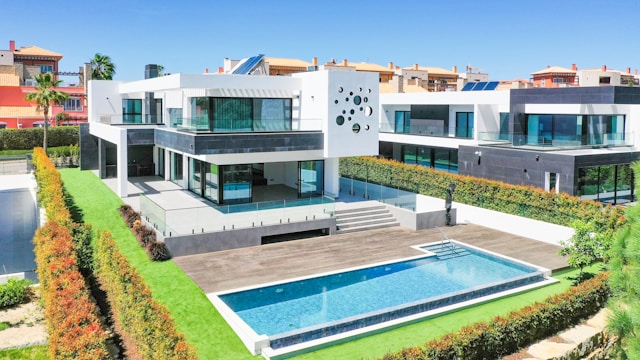
Such properties often have large plots of land and are designed to afford the maximum level of privacy and security systems. High-end gated communities often have controlled access, private roads, golf courses, and exclusive recreational facilities.
Who Buys Luxury Real Estate?
The buyer base in the luxury real estate market is relatively small but highly influential. These purchasers often have diverse motivations. Because of this complexity, professionals in the industry must constantly follow market conditions. How real estate agents stay updated on luxury market trends has become important within the industry.
The target buyers of luxury real estate include:
- High-Net-Worth Individuals (HNWIs): High-net-worth individuals possess assets that amount to more than $1 million.
- Ultra-High-Net-Worth Individuals (UHNWIs): Ultra-high-net-worth individuals possess assets that amount to more than $30 million.
- International Buyers: Buyers from countries such as Asia, the Middle East, Europe, and North America purchasing properties in major cities across the globe.
- Lifestyle Buyers: Not all luxury buyers are driven purely by investment. Many are motivated by lifestyle considerations such as climate, scenery, or proximity to cultural and recreational experiences.
How Luxury Properties Are Valued
Valuing high-end homes requires a different approach from standard residential pricing. Effective luxury real estate marketing also plays a role, as presentation, branding, and exposure to the right buyer network can significantly influence how a property is priced.
Comparable Luxury Sales
One of the most common valuation methods is analyzing recent home sales of similar high-end properties in the same area. These comparisons provide insight into high-end residential market trends, helping brokers and appraisers determine how a property fits within the broader luxury segment.
Architectural Design and Craftsmanship
Luxury homes can also be valuable due to their unique architectural designs and craftsmanship. Homes that are custom-designed by famous architects or have unique structural designs can be valuable due to their rarity and unique appeal.
Unique Amenities and Features
Premium amenities can significantly increase home value. In many luxury homes, lifestyle features become major selling points. Examples include:
- Private cinemas
- Smart home technology
- Wine cellars
- Infinity pools
- Outdoor spaces
Location Prestige
One of the most significant factors that add value to luxury properties is their good real estate location. Some locations are globally recognized and are associated with luxury and wealth.
Opportunities in the Luxury Real Estate Market
Understanding how to break into the luxury real estate market often begins with recognizing the unique advantages this segment can provide compared with traditional residential investments.

Wealth Preservation & Long-Term Capital Appreciation
One of the most significant opportunities that luxury properties offer is their ability to preserve wealth over long periods of time. Luxury properties in globally recognized cities and locations are often valuable and tend to retain their value over long periods. Luxury homes in prestigious districts, waterfront areas, or global financial hubs can benefit from long-term appreciation as demand from affluent buyers increases.
Rental Income From Luxury Vacation Properties
One of the opportunities that luxury properties offer is their ability to generate rental income, particularly short-term rental properties located in globally recognized locations that are often in high demand for vacations.
Portfolio Diversification
For many investors, the luxury housing market serves as an alternative asset class within a diversified investment portfolio. By balancing real estate with stock market, bonds, and other investments, buyers can spread risk while maintaining exposure to tangible assets with potential long-term value.
Risks and Challenges in the Luxury Real Estate Market
While there are many attractive investment opportunities in the luxury real estate market, there are also certain risks that investors must take into consideration before investing.
Market Liquidity & Economic Sensitivity
It takes a relatively longer time to sell a luxury property in comparison to a standard residential home. Demand in the luxury segment is also closely tied to global wealth cycles. Economic uncertainty, stock market volatility, or changes in housing markets can influence purchasing activity among affluent buyers, which may temporarily slow the luxury housing sector.
High Maintenance Costs
Investing in a luxury home comes with high costs of ownership. Luxury homes are often large estates, waterfront homes, or architecturally unique homes that require a great deal of upkeep and property management costs.
Regulatory and Tax Considerations
Regulatory frameworks are also an important part of investing in luxury real estate. Some countries have a high mansion tax system in place for high-end homes. There are also restrictions on foreign investors in certain nations.
Luxury Real Estate as an Investment
For many affluent buyers and investors, the luxury real estate market represents more than an opportunity to own a prestigious home. It can also serve as a strategic long-term investment. Prime investment properties located in globally recognized cities or exclusive resort destinations often maintain strong demand because supply in these areas is limited. As a result, luxury homes can function as tangible assets that preserve wealth while potentially appreciating over time.
Successful investment in this segment often depends on both market timing and effective promotion. Developers, brokers, and sellers increasingly focus on how to market luxury real estate in ways that reach affluent buyers around the world. Digital storytelling has become particularly influential, with professionals exploring how to use video ads for luxury real estate marketing to showcase architecture, wellness amenities, and scenic surroundings.
The Bottom Line
The luxury real estate market represents the highest tier of residential property, where exclusivity, prime locations, and exceptional design come together to create homes that go far beyond standard housing. These properties are often defined not just by price, but by rarity, prestige, and the lifestyle they offer.
The luxury segment functions as a distinct part of the broader housing industry. It is influenced by global wealth trends, international investment flows, and limited supply in prestigious locations. Understanding how this segment works can help buyers, investors, and industry professionals navigate one of the most dynamic areas of the property world.
Luxury Real Estate Market FAQs
What does luxury mean in real estate?
In real estate, "luxury" refers to properties that are substantially above the average price in a particular market and have superior attributes such as prime location, high-end design, superior materials, and exclusive facilities.
What is the 2% rule for properties?
The 2% rule is an investment principle implying that a real estate investment should have a monthly income that represents at least 2% of the total investment. This principle is rarely applied in the luxury real estate market, as investors in this market often prefer to hold onto such properties for long-term benefits rather than for investment income.
What is the rule of 7 in real estate?
The rule of 7 implies that a homebuyer may need to hold onto a property for at least 7 years to cover the costs of buying and selling real estate, such as closing costs, real estate agent commissions, and market fluctuations.
What is the hottest real estate market?
The hottest real estate markets are usually cities that have strong growth, high demand, and scarce housing. In the case of the luxury real estate market, cities such as New York, Miami, Los Angeles, South Florida, Dubai, and London are some of the hottest markets in the world.
How can I break into the luxury real estate market?
Understanding how to break into luxury real estate market usually starts with building strong industry expertise, networking with affluent clients, and gaining experience in high-value property transactions. This often begins with working with existing high-end brokerages, specializing within high-end neighborhoods, and developing luxury home marketing expertise to capture high-end buyers and sellers.
Disclaimer
This information is educational, and is not an offer to sell or a solicitation of an offer to buy any security which can only be made through official documents such as a private placement memorandum or a prospectus. This information is not a recommendation to buy, hold, or sell an investment or financial product, or take any action. This information is neither individualized nor a research report, and must not serve as the basis for any investment decision. All investments involve risk, including the possible loss of capital. Past performance does not guarantee future results or returns. Neither Concreit nor any of its affiliates provides tax advice or investment recommendations and do not represent in any manner that the outcomes described herein or on the Site will result in any particular investment or tax consequence.Before making decisions with legal, tax, or accounting effects, you should consult appropriate professionals. Information is from sources deemed reliable on the date of publication, but Concreit does not guarantee its accuracy.


